

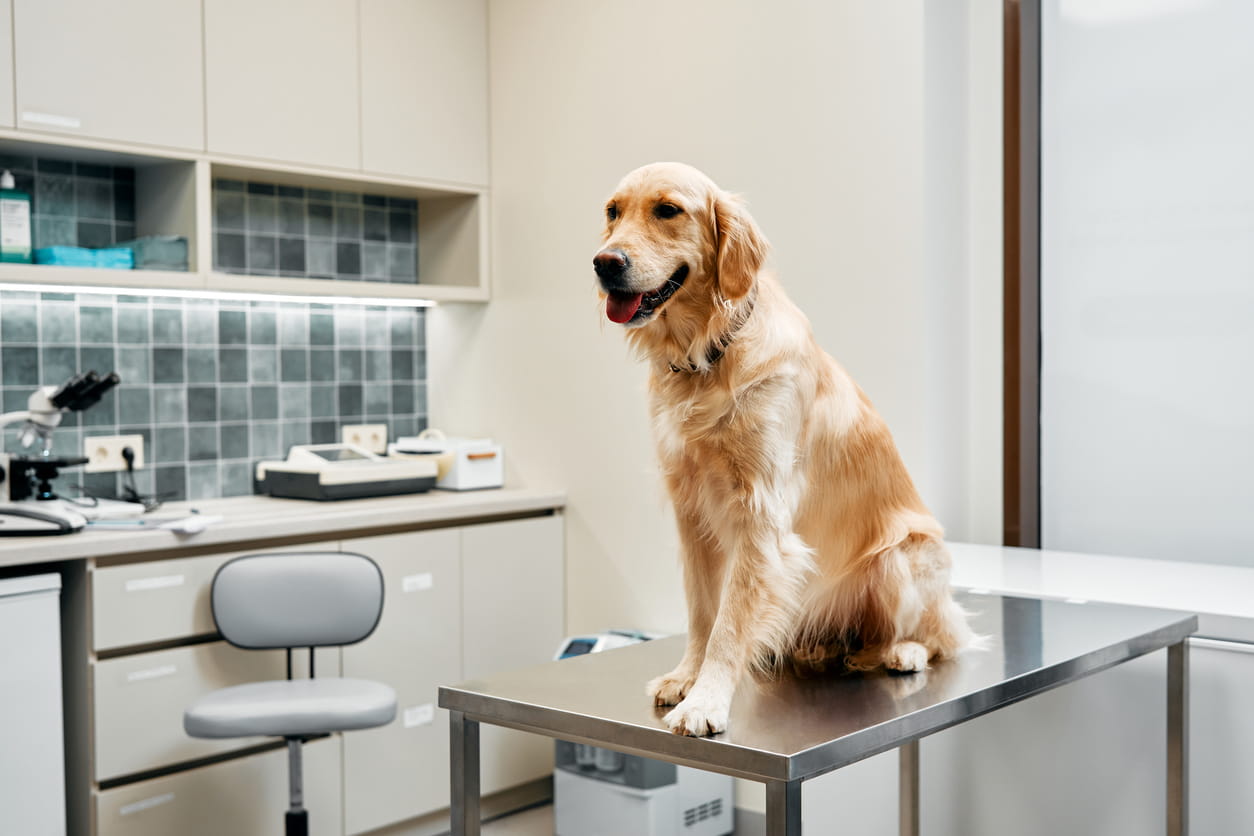
Veterinary practices often outgrow their floor plans before they expect to. When space starts to feel tight and inefficiencies become more noticeable, it’s time to take a closer look at how your layout and equipment are working for you. A smart, multi-functional design can help your team move faster, ease client wait times, and reduce stress on both patients and staff.
The good news is, improving your layout doesn’t have to mean expensive construction or major downtime. The right equipment and setup can help you get more from your existing space without tearing down walls or disrupting daily operations.
Why Multi-Functional Spaces Matter in Veterinary Settings
As your practice grows, so do your daily demands. More patients, more staff, and more services all require better traffic flow and faster turnover between appointments. Without an efficient layout, it becomes harder to keep up with your caseload, especially during emergencies or high-volume times.
Many veterinary teams try to work around these issues by using one space for multiple functions. While that’s a smart strategy, it only works if your equipment supports that flexibility. Multi-functional rooms are most effective when fitted with mobile or modular tools that allow staff to switch quickly between exam, treatment, or recovery needs.
Veterinary professionals know the impact of delays, crowding, or poor room flow. These challenges affect clinical outcomes and client satisfaction, and they also contribute to burnout over time. Creating a more adaptable workspace helps your team focus on care, not logistics.
Start with a Walkthrough
The first step in improving your layout is to observe how your team and clients use the space. Follow the patient journey from check-in to discharge. Identify areas where people or pets tend to wait, backtrack, or get delayed.
Ask yourself the following questions:
- Are staff members walking long distances between tasks?
- Are clients waiting more than 30 minutes to see the veterinarian?
- Are any rooms frequently overcrowded or underutilized?
- How long does it take to respond during an emergency?
Technology can help here. Use step trackers or simple time studies to measure how layout changes might impact workflow. After making any adjustments, repeat the same tracking process to see if efficiency has improved.
It’s also important to involve your team. Staff members often have practical insights about which areas feel cramped, which tools get in the way, or which setups slow them down.
Common Areas to Reevaluate
Every veterinary clinic is different, but most include the following zones. Each one can benefit from multi-functional design strategies that improve efficiency and flexibility.
Reception and Waiting Area
This space sets the tone for the entire visit. A welcoming, low-stress environment reduces anxiety in both animals and their owners. Natural light, visual separation between dogs and cats, and durable, easy-to-clean surfaces are helpful features. While this may not be a treatment space, it plays a critical role in managing first impressions and setting up smoother transitions into the exam room.
Exam Rooms
Most veterinary practices operate with two to four exam rooms. Some clinics dedicate certain rooms to specific species to reduce stress, especially for cats. Fold-down exam tables that attach to the wall are ideal for small spaces. When not in use, they fold flat to open up the room, which is helpful during visits with large or reactive dogs who are better treated on the floor. Mobile exam tables offer additional flexibility and can be moved to other rooms or used to transfer animals with less handling.
You can explore veterinary exam room equipment designed specifically for ergonomic comfort and multi-use efficiency.
Treatment Areas
Also known as “back rooms,” these spaces often handle diagnostics, wound care, fluid administration, and other procedures. Exam rooms can be converted into short-term treatment rooms when needed by using mobile carts, dividers, and dual-purpose equipment. Placing frequently used tools within arm’s reach helps reduce steps and keeps the team focused on patient care.
TriStar offers a full line of treatment room equipment to help veterinary teams streamline workflows and improve patient handling in these busy areas.
Surgical Suite
Ideally, the surgery area should be located near the treatment room so staff can quickly assist during emergencies. This layout also allows surgical cases to be transferred without crossing through public areas, which improves safety and efficiency. Surgical tables, lighting, and cabinets should be designed to support sterile workflows and easy cleaning.
If you’re upgrading this area, browse our veterinary surgery equipment including surgical tables and surgical sinks that support clinical hygiene and staff ergonomics.
Recovery Zone
Post-operative patients need quiet, easily monitored spaces. Placing the recovery area close to the treatment room helps staff tend to patients without stepping away from active care zones. Veterinary holding cages made of stainless steel are a smart choice here. They are easy to disinfect, long-lasting, and comfortable for resting animals.
View our animal holding equipment to find options designed to support patient comfort and clinic cleanliness during post-op recovery.
Isolation Room
Every clinic needs a separate space for contagious animals. Whether it’s for suspected respiratory infections, skin conditions, or confirmed infectious disease, the isolation room should be fully enclosed, with species-specific holding cages and minimal traffic. Equipment in this area should be easy to sanitize and built to last through frequent cleaning.
Equipment That Supports Multi-Functional Design
When it comes to maximizing space, the right veterinary equipment is just as important as your floor plan. At TriStar Vet, we design stainless steel exam tables, cabinets, and cages with flexibility and durability in mind.
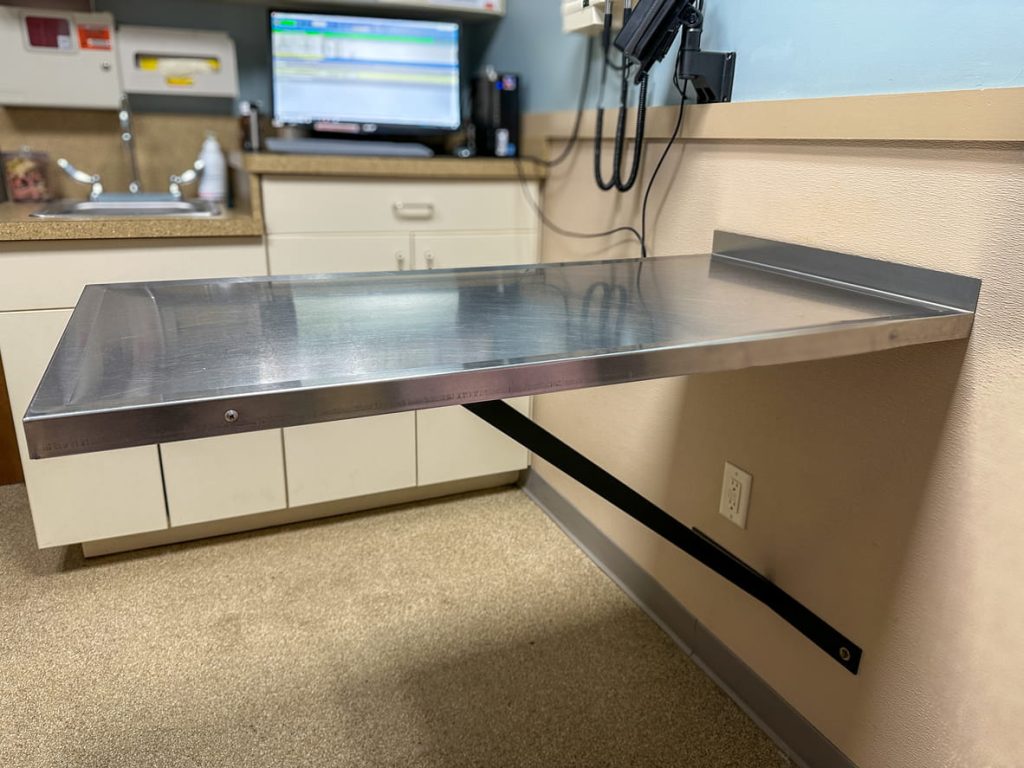
Wall-Mounted Folding Tables
These stationary tables are bolted to the wall and fold down when needed. They provide a stable surface for exams but can be tucked away to open up the room. This is especially useful when working with larger animals or when the space needs to function as something other than an exam room.
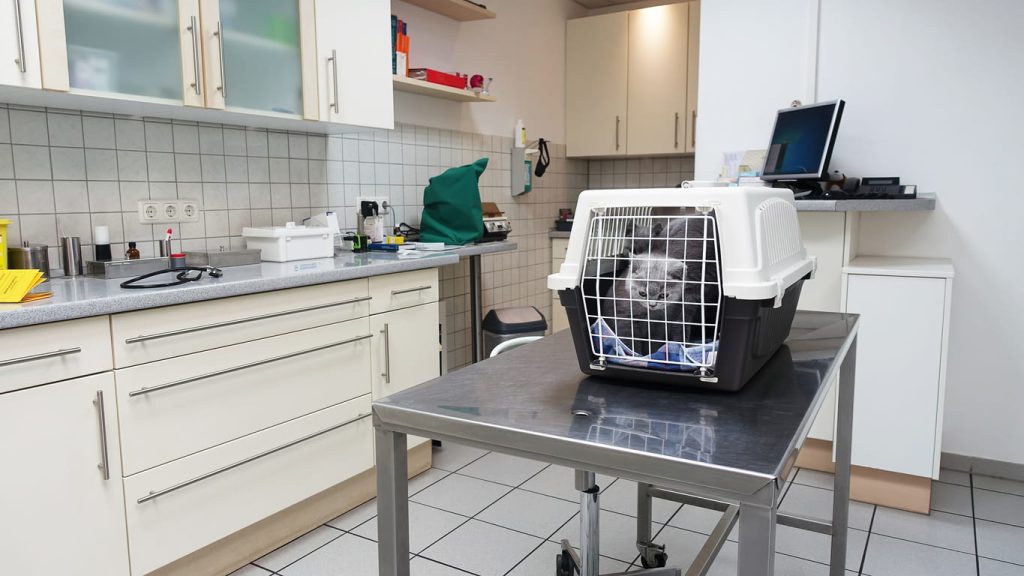
Mobile Exam Tables
Mobile tables allow staff to move animals between rooms without excessive lifting or handling. They can also be used in treatment areas or temporary overflow rooms to keep workflow moving.
Stainless Steel Exam Cabinets
Our cabinets are fully customizable and built from 16-gauge type 304 stainless steel. Optional glass-front doors make it easy to see stored supplies, which reduces the time spent searching for items. Cabinets can be fitted to specific rooms, layouts, or workflows depending on your needs.
A Smarter Way to Grow Your Practice
Improving your clinic layout is not always about adding square footage. In many cases, it’s about making the space you already have work harder. Multi-functional design, paired with the right equipment, allows your practice to expand services, improve efficiency, and reduce stress for everyone involved.
At TriStar Vet, we understand the daily challenges that veterinary teams face. That’s why we build equipment based on real-world feedback from professionals across the U.S. and Canada. Our products are made to support your workflow, hold up to heavy use, and adapt as your practice evolves.
Whether you are updating a few rooms or outfitting an entirely new space, we can help you choose the right tools to meet your goals.
Get Started with Help from the Professionals
Contact the animal care experts at TriStar Vet to learn how our stainless steel veterinary exam tables, cabinets, and pet holding cages can support your clinic’s layout and growth. Call us at 1-877-459-7827 or reach out through our contact form for a consultation.
Request a catalog and check out the full selection of veterinary care equipment.