If your veterinary clinic handles dentistry, wound irrigation, triage cleanup, or daily prep work, you’ll need to install a wet zone. But which is right for your space and workflow: a wet table or a wet prep station?
At TriStar Vet, we help veterinary professionals match the right solution to their practice’s size, layout, and service mix. Below, we break down the key differences, use cases, and decision factors so you can choose equipment that supports safer, more efficient patient care.
Wet Table vs Wet Prep Station: The Key Difference
Both wet tables and wet prep stations are designed for procedures involving fluids, but they serve slightly different functions.
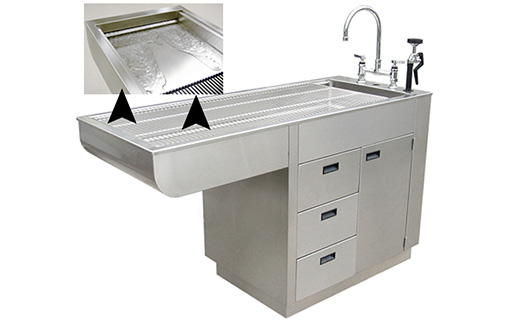
Wet tables feature a deep, built-in sink and integrated drainage. They are ideal for messy clinical tasks like wound flushing, abscess cleaning, and dental procedures where fluid containment is critical.
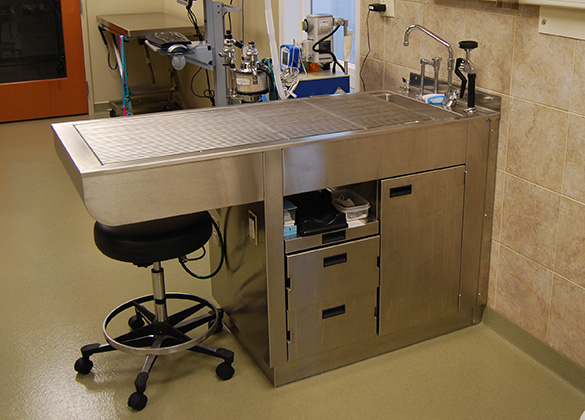
Wet prep stations include a smaller basin area paired with additional counter space and storage. They are built for high-frequency prep tasks, such as rinsing, scrubbing, and cleaning instruments, where workflow efficiency and organization are top priorities.
When to Use a Wet Table in Veterinary Clinics
Wet tables are essential for clinical zones where fluid control is non-negotiable. Common use cases include:
- Dental procedures
- Wound irrigation and abscess drainage
- Dermatology cases
- Surgical prep and emergency cleanup
Their design reduces splatter and helps prevent cross-contamination between procedures. Wet tables also allow for faster turnover between cases, which is especially important in high-volume practices or busy treatment rooms.
When a Wet Prep Station Makes More Sense
Wet prep stations shine in areas where continuous cleaning and prep work is taking place.
These include:
- Instrument cleaning
- Surface rinsing
- General surgical prep support
Many clinics choose a wet prep station when space is limited and storage is needed alongside the sink. TriStar’s wet prep stations come with built-in storage options, including configurations with up to three drawers and one or more doors. This setup helps consolidate prep supplies and maintain cleaner workflows in busy back rooms.
Choosing Based on Workflow, Space, and Staff Movement
The best solution often depends on how your practice is laid out. Consider the following:
- Is there a central treatment area where multiple team members rotate?
- Would it be better to have a dedicated prep zone to reduce traffic around surgery or dental?
- Does the available space have adequate plumbing access?
- Can contractors easily install the unit without major facility changes?
Make sure to factor in maintenance accessibility, as well as how the table or station fits within your infection control protocol. Choosing designs that reduce splatter, standing water, and cleanup time can significantly improve safety and efficiency.
Matching Table Size to Caseload and Patient Type
Not every table fits every practice. Choosing the right size helps support your patient mix and daily demands:
- For clinics serving a high percentage of large-breed dogs, opt for the largest wet table available.
- For smaller or general practices, mid-size tables often provide the right balance of function and space.
- If your treatment room is tight, select a smaller configuration based on layout constraints and staff workflow.
Always consider how the wet zone fits in relation to high-traffic treatment paths like surgery and dental bays.
Cost vs Value: Why Stainless Steel Is Worth It
While budget is always a factor, it’s important to consider total lifecycle value. Investing in high-quality stainless steel veterinary equipment pays off in durability, hygiene, and long-term performance.
Unlike plastic or laminate materials, stainless steel:
- Won’t warp, crack, or stain over time
- Is non-porous and easy to sanitize
- Withstands chemical exposure and heavy use
TriStar’s stainless steel equipment is built to last the life of your practice. And with our warranty and repair support, you’ll have peace of mind long after installation.
Which Should You Choose? Common Scenarios
Still unsure whether a wet table or wet prep station is best? Here’s how many clinics make the call:
- If your caseload includes heavy dental work, wound care, or fluid-heavy procedures, a wet table is usually the better fit.
- If your team needs a streamlined cleaning and prep hub with built-in storage, a wet prep station provides daily workflow support.
In larger clinics or specialty practices, installing both may be ideal. Separate zones help reduce bottlenecks and allow staff to work more efficiently during peak hours.
When a Water-Flo Table Makes the Most Sense
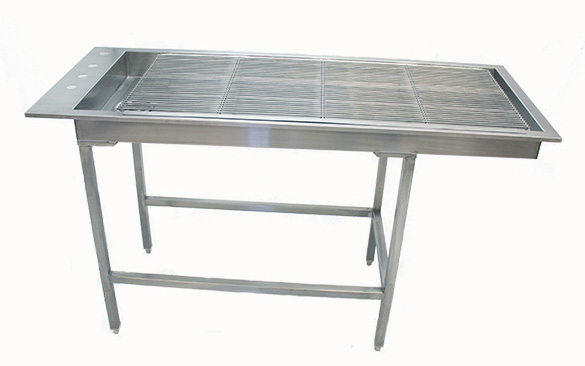
For procedures involving heavy fluid runoff, TriStar’s patented Water-Flo tables provide advanced drainage technology. These tables feature a grate where the patient lies, allowing fluids to pass through while a gentle stream of water keeps the surface wet and encourages positive drainage throughout the procedure.
The tub is sloped for quick rinse-down and easy cleanup. Once the procedure is complete, the entire surface can be washed and sanitized in minutes, without harsh chemicals or extended downtime.
The TriStar Approach: Build to Fit the Way You Work
At TriStar Vet, we design and manufacture veterinary wet tables, wet prep stations, and other stainless steel veterinary equipment with real workflow challenges in mind.
Whether you’re outfitting a startup clinic or upgrading your current treatment zone, we’re here to help you choose solutions that improve efficiency, safety, and sanitation.
All TriStar products are made in the U.S.A. using ergonomic, durable designs that stand up to years of use, because your equipment should work as hard as your team does.