

Pet owners evaluate your practice long before you enter the exam room. They notice how their dog reacts to the noise level. They notice whether their cat is placed near barking dogs. They notice if the clinic smells clean and whether the reception area feels organized. These observations shape their level of trust before any medical conversation begins.
Your physical environment influences how clients perceive your professionalism, efficiency, and attention to detail. A crowded waiting area or disorganized layout creates tension. A calm, well-planned space builds confidence. That confidence directly affects reviews, referrals, and long-term client retention.
Pet-friendly amenities are not cosmetic upgrades. They are intentional design decisions that improve workflow, reduce stress, and support sustainable clinic growth.
Pet-Friendly Amenities and Why They Matter to Clinic Success
When people hear the phrase “pet-friendly amenities,” they often think about décor. In reality, the concept is much broader. It includes layout efficiency, sensory control, sanitation, ergonomics, and the overall emotional experience of pets, clients, and staff.
Creating a true pet-friendly environment in a clinic requires thoughtful planning. It means evaluating how patients move through your space, how sound carries from one area to another, how surfaces are sanitized, and how your team performs daily tasks.
Simple upgrades can improve comfort immediately. Soft classical music may help lower stress for pets and owners. Natural light and pet-safe plants can make a clinical space feel more welcoming. Subtle scent control may ease anxiety in some situations.
The most meaningful improvements, however, are operational. Efficient workflow and reduced patient stress support stronger team performance. A clinic that functions smoothly behind the scenes feels calm and organized to clients.
Start With Flow: Layout Choices That Reduce Stress and Bottlenecks
Every veterinary hospital includes core areas such as reception, exam rooms, treatment spaces, surgery, and recovery. Even when structural limitations exist, zoning can be optimized to reduce congestion and unnecessary movement.
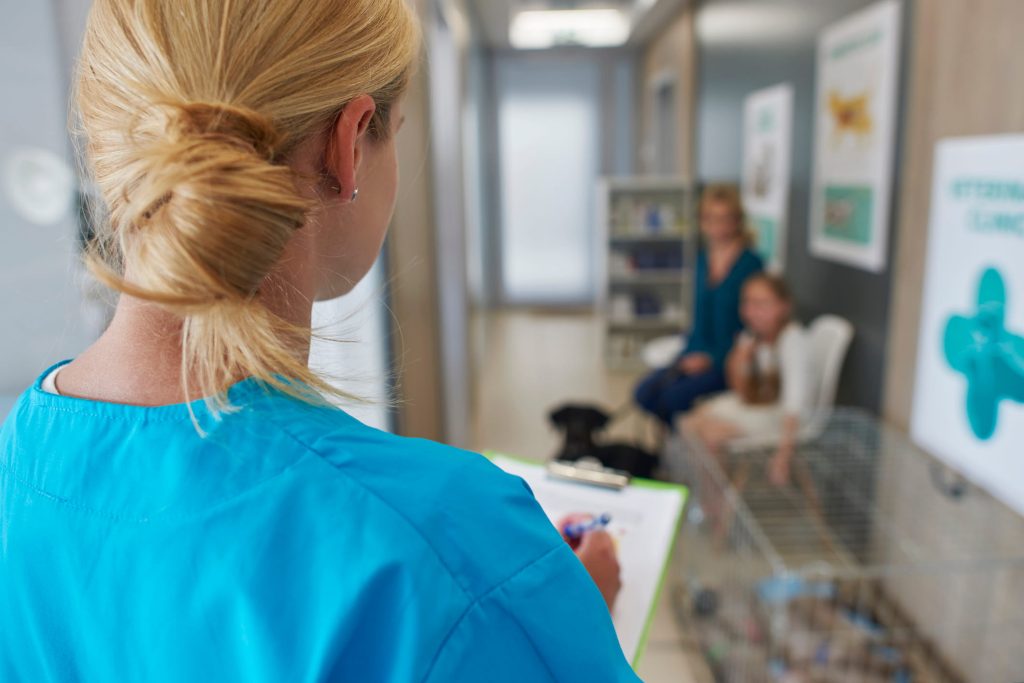
Evaluate where delays typically occur. Observe how pets transition from check-in to exam to discharge. Identify moments where staff double back or lose time retrieving equipment.
A well-designed layout supports smoother transitions, shorter visible wait times, and fewer stressful animal interactions. When movement is predictable and organized, both safety and efficiency improve. Clients may not consciously analyze your floor plan, but they recognize when a visit feels streamlined.
The Waiting Room Experience: Comfort for Pets and Pet Owners
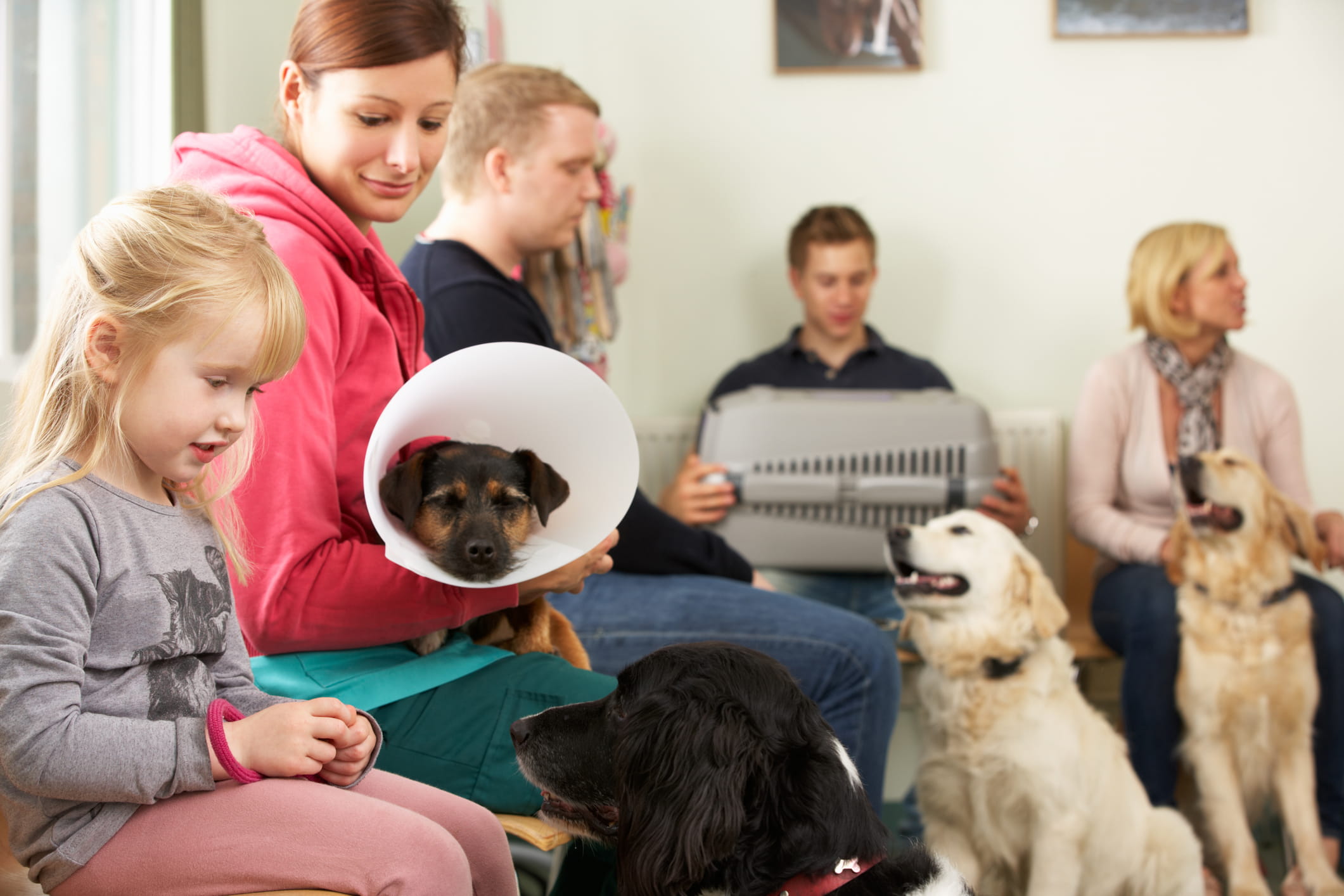
The waiting room sets the tone for the appointment. A clean, orderly, thoughtfully arranged space communicates that the rest of your clinic operates with the same level of care.
Warm color palettes soften the clinical atmosphere. Cushioned seating shows consideration for clients managing anxious pets. Clear signage and an uncluttered reception desk reduce confusion and hesitation.
Creating separate zones for cats and dogs is especially important. Many feline patients experience elevated stress when exposed to barking dogs. A designated feline area minimizes sensory overload and helps prevent defensive behavior. Structured spacing also reduces the likelihood of reactive encounters between dogs.
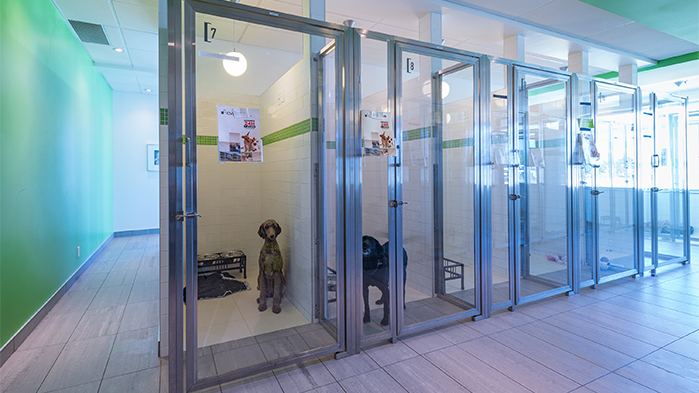
Thoughtful boarding and housing solutions reinforce this approach. Properly designed veterinary boarding kennels help reduce noise transfer and support sanitation, while purpose-built cat condos for veterinary clinics provide secure, stress-conscious housing tailored to feline needs.
Providing fresh water for dogs and accessible educational materials for owners adds another layer of professionalism. These details reflect intentional planning rather than surface-level decoration.
Sensory-Friendly Design to Lower Anxiety
Noise control is one of the most impactful yet overlooked elements of clinic design. Kennel areas often generate the highest sound levels, increasing stress for both patients and staff.
Installing sound-dampening ceiling tiles or wall panels can significantly reduce overall noise. Designating quieter exam rooms for particularly anxious pets can further improve handling safety.
Lighting also contributes to patient behavior. Soft, even lighting supports calmer responses, while harsh overhead lights may heighten agitation. Neutral wall colors maintain a steady environment.
When pets remain calmer, exams proceed more efficiently. This leads to safer handling, fewer repeated restraint attempts, and better use of staff time.
Cleanliness and Odor Control as a Trust Signal
Clients assess cleanliness immediately. Visual organization matters, but odor control is equally critical. Even a facility that appears clean can lose credibility if unpleasant smells linger.
Material selection plays a major role in sanitation success. High-quality stainless steel resists corrosion, does not absorb odors, and withstands repeated cleaning cycles. Proper wet-area design minimizes standing water and reduces contamination risks.
These decisions affect more than appearance. They support infection control, labor efficiency, and long-term maintenance savings. Surfaces that are easy to sanitize reduce turnaround time between patients and reinforce client confidence.
Upgrades That Support Clinical Efficiency and Team Performance
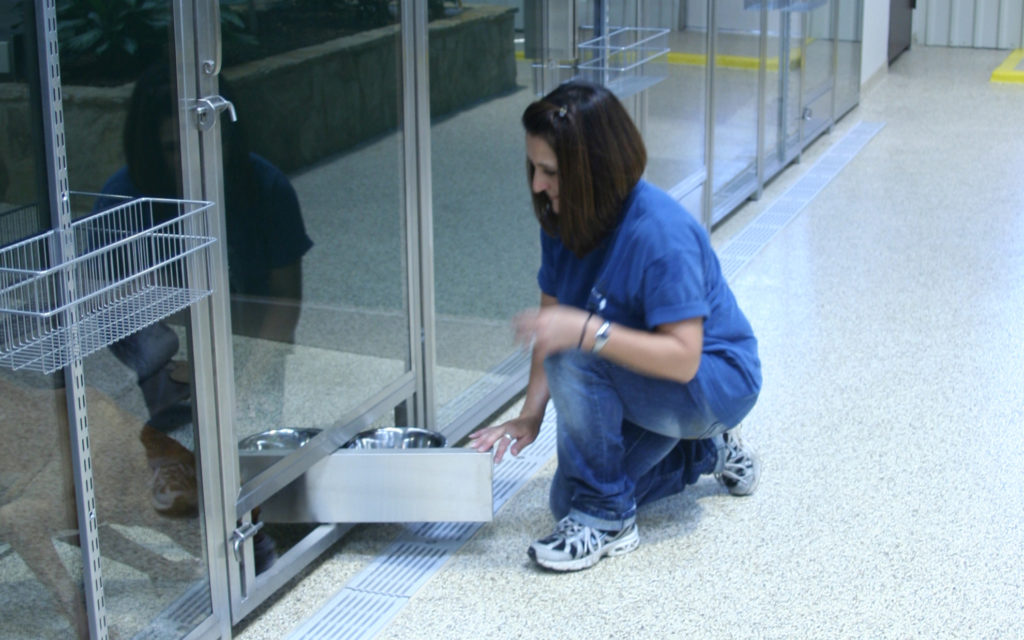
Pet-friendly design must also protect your team. Storage placement, staging areas, and accessible equipment reduce unnecessary steps and physical strain.
For example, a wet prep station that combines storage and surgical preparation functions centralizes key tasks. This improves organization and simplifies sanitation.
Ergonomic equipment is equally important. Veterinary professionals perform repetitive lifting and positioning throughout the day. Installing lift-assisted exam tables can significantly reduce back strain and handling risk. Over time, these investments help protect staff health and improve retention.
At TriStar Vet, we design customizable stainless steel equipment engineered specifically for veterinary workflows. Our products are built to improve daily efficiency while maintaining durability and sanitation standards.
Pet-Friendly Amenities That Create Differentiation and Drive Growth
Thoughtful clinic design directly influences reviews, referrals, and retention. Clients who experience efficient scheduling, calm waiting areas, and organized care are more likely to leave positive feedback and return for future services.
The specific amenities that make sense for your clinic depend on your service mix. General practices, specialty hospitals, grooming facilities, and boarding operations each have unique needs. Regardless of specialty, the underlying principle remains consistent. Strategic environmental design strengthens both perception and operational performance.
Bringing It All Together with TriStar Equipment
TriStar Vet designs and manufactures veterinary exam tables, professional grooming equipment, boarding systems, housing solutions, and stainless-steel infrastructure that support efficient animal care. Our equipment is built for ergonomic comfort, complete cleanability, and long-term durability.
All products are manufactured in the United States and engineered for the realities of daily veterinary practice. We focus on practical innovations that save time, support sanitation protocols, and reduce physical strain on your team.
A well-designed clinic environment improves workflow, reinforces professionalism, and creates a space where pets, clients, and staff can operate with greater confidence and less stress.