

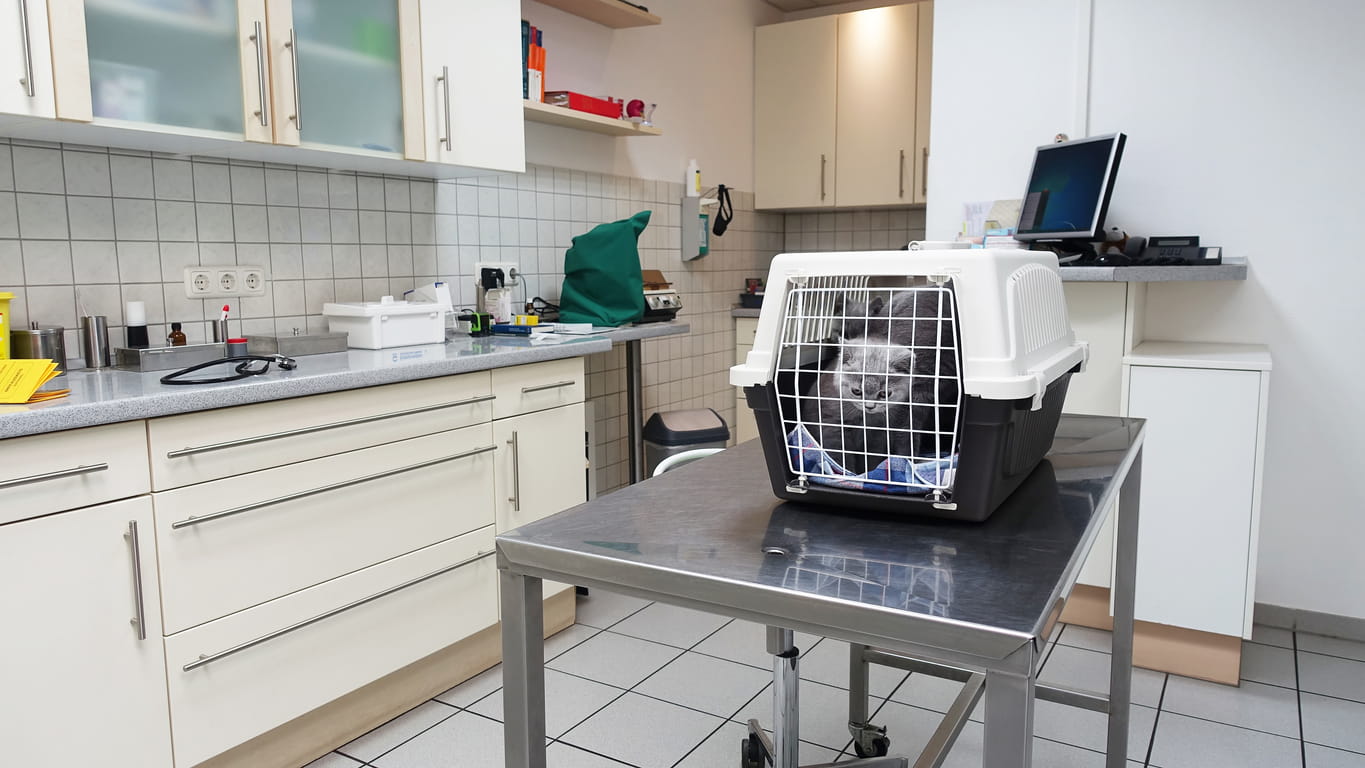
The exam table is one of the most commonly used pieces of equipment in any veterinary clinic. It’s where you evaluate, treat, and often build trust with patients and their people. Choosing between a mobile or stationary veterinary exam table may seem simple, but the right decision depends on how your team works, the types of patients you treat, and the layout of your facility.
Both options have their advantages, and many practices benefit from a combination of the two. Below, we’ll break down the strengths and limitations of each to help you choose the best fit for your workflow, space, and patient needs.
What Is a Stationary Veterinary Exam Table?
A stationary exam table is either built with a weighted base to stay firmly in place or mounted directly to a wall. Wall-mounted models may fold up when not in use, helping maximize space in smaller rooms.
Benefits of Stationary Tables
The biggest benefit of a stationary exam table is stability. No matter how anxious or energetic the patient, the table stays secure. This adds a layer of safety for both animals and staff—especially when treating large, nervous, or unpredictable dogs.
Many stationary models can be equipped with hydraulic or electric lifts, which reduce the need for lifting and help protect your team from strain and repetitive-use injuries.
Limitations of Stationary Tables
The downside is lack of flexibility. Once installed, stationary tables can’t be easily moved. Tables with weighted bases may require multiple staff members to shift, which can increase the risk of back or soft-tissue injuries. If space is tight or your layout changes frequently, a fixed table can sometimes get in the way.
What Is a Mobile Veterinary Exam Table?
Mobile exam tables are built for movement. These models typically include locking casters and can be wheeled between rooms or stations as needed.
Benefits of Mobile Tables
Mobile tables offer more flexibility in how you use your space. In a busy clinic, you can move the table between exam rooms or into treatment areas without having to transfer the patient. This minimizes handling, lowers stress for the animal, and reduces lifting risks for your staff.
Some models include built-in veterinary exam cabinets or supply drawers, allowing you to bring everything you need directly to the patient.
Mobile lift tables also support safe handling of large or senior pets, making it easier to position animals without additional help.
When Mobility Becomes a Limitation
For high-energy or aggressive patients, mobile tables may not provide the same stability as stationary models—especially if the wheels are not fully locked. They’re also not ideal for procedures that require the table to remain completely still, such as dental work or minor surgeries.
Mobile vs. Stationary: Key Factors to Consider
Choosing the right table setup depends on more than just preference. Below are a few key considerations to help guide your decision.
Ergonomics and Staff Safety
Any veterinary exam table you choose should support proper ergonomics and reduce the risk of injury. Lift tables, whether stationary or mobile, help minimize lifting and repositioning. This not only keeps your staff safer but also supports better handling of heavier patients.
Workflow and Space Efficiency
In smaller clinics or fast-paced environments, mobility can make a big difference. A mobile veterinary table allows your team to adjust quickly, move equipment out of the way, or bring a patient straight to the treatment area without delay.
On the other hand, stationary tables can streamline high-volume exam rooms where patient flow is predictable and multiple staff members need access to a central location.
Cleaning, Durability, and Infection Control
Whether stationary or mobile, your exam table must be easy to disinfect and able to withstand heavy daily use. At TriStar Vet, all of our veterinary exam tables are built from heavy-duty stainless steel with smooth, easy-to-clean surfaces that support your infection control protocols.
Budget and Long-Term Value
A stationary exam table is often more affordable than a mobile model with lifts or integrated storage. However, don’t forget to factor in the long-term value. Mobile tables reduce labor strain and offer more flexibility over time, which can save money on staffing and injury prevention.
If you’re working with a tighter budget, you can start with a stationary table and add mobile or lift-equipped models as your practice grows.
Matching Exam Tables to Your Practice Type
Small or Growing Clinics
In smaller facilities where every square foot matters, a mobile table can help you make the most of your space. If you need to treat large dogs on the floor or temporarily clear an exam room, a movable table provides the flexibility to adjust.
High-Volume or Multi-Doctor Practices
For busy practices with multiple vets and a steady stream of appointments, stationary tables with electric lifts are often the most efficient. Reducing the need to move equipment or lift patients speeds up workflow and minimizes downtime.
Emergency and Surgical Settings
In an emergency situation, mobility can be a major advantage. A mobile lift table helps move animals quickly and safely from intake to treatment. However, surgical tables must be ultra-stable and allow for precise adjustments in height and angle. For those needs, a fixed surgical table is essential.
Design Your Exam Space with TriStar Vet
Your equipment should support the way you work, not slow you down. At TriStar Vet, we design exam tables, veterinary surgery equipment, veterinary exam cabinets, veterinary pet holding cages, and other essential tools that help you create a clean, ergonomic, and efficient practice.
We build every piece from ultra-durable stainless steel, then field-test our designs to make sure they work in real-world settings just like yours.
Whether you’re renovating a room or outfitting a brand-new facility, we’ll help you choose the right combination of mobile and stationary tables to match your space, staff, and patient needs.
Contact our team to get started with a custom consultation.